
How the network works
1BSV is a layered multicast network: a transaction is sent once and the fabric carries it to everyone who subscribed: numbered, repairable, and built to grow without a ceiling.
One transaction, end to end
A sender hands its transaction to the nearest entry point. From there the network does the work, once.
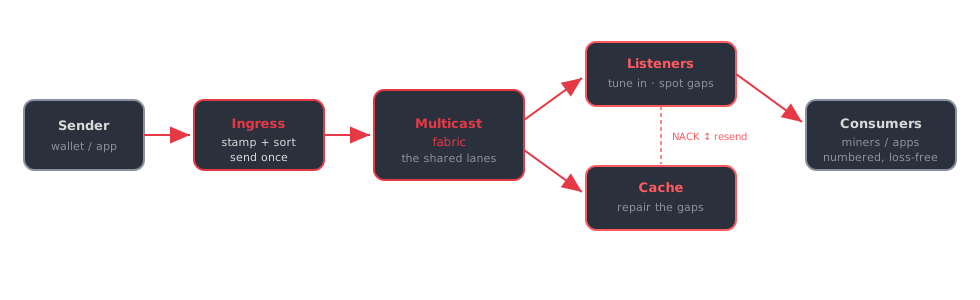
Stamp, sort, send once
Accepts a transaction, numbers it, sorts it into a delivery lane by a fixed rule, and broadcasts it a single time.
The shared lanes
The multicast fabric carries each lane to everyone subscribed to it, with no per-receiver copies.
Receive, repair, deliver
Listeners tune in and watch the numbers; a cache resends anything missing. Miners and apps get exactly what they subscribed to: numbered and complete, with nothing silently lost.
What the network does
Four properties carry the whole design.
Ingress points scaled widely
Entry points sit close to senders and grow in number as the network grows. A sender always hands off to the nearest door, and adding more doors adds capacity; there is no single front gate to congest.
Self-repairing delivery
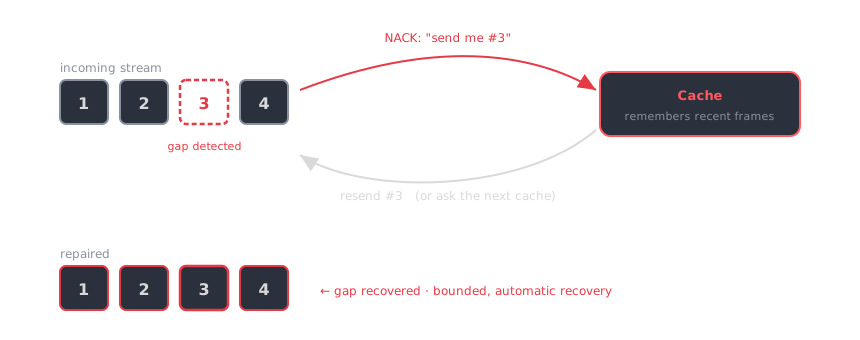
Every stream is numbered, so a missing message is detected the instant it's skipped, never guessed. The receiver asks a nearby cache to resend it; if that cache doesn't have it, the request moves on immediately. Loss can't hide, and it can't persist.
Sharded and filtered delivery at the edge
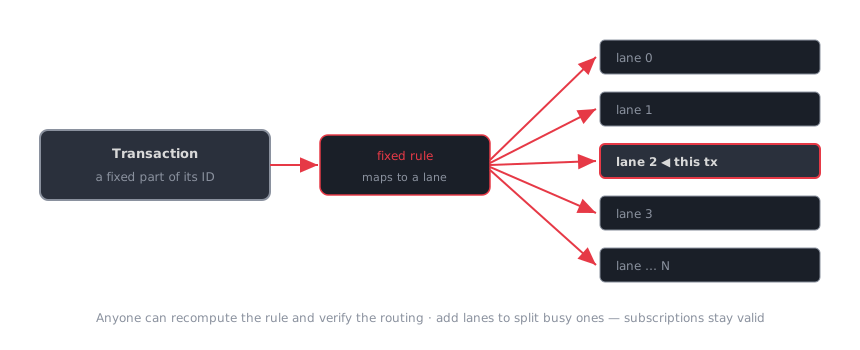
Traffic is split across independent lanes by a fixed, verifiable rule: the same transaction always takes the same lane, and anyone can recompute it. Receivers tune in to only the lanes they care about, so bandwidth tracks interest, not the size of the network.
Highly available delivery
Receivers connect over the path that fits them (redundant tunnels or dedicated cross-connects) with automatic failover. If a path drops, delivery continues on another without losing the stream.
Built to scale horizontally
Multicast is the one medium that gets cheaper per subscriber as it grows: publish once, reach everyone tuned in.
Growth is simple: add network, add compute. There's no central bottleneck to widen and nothing to re-architect; capacity spreads across independent lanes and ingress points. The path runs toward 1B+ transactions per second.
The protocol is open
Every mechanism here is published as an open standard anyone can implement and verify.